
Erik Christopher Sahlin (suh-LEEN) is the framer of the Big Woods Declaration of 2026. Across multiple careers, Sahlin has focused on finding better ways to tackle complex problems.
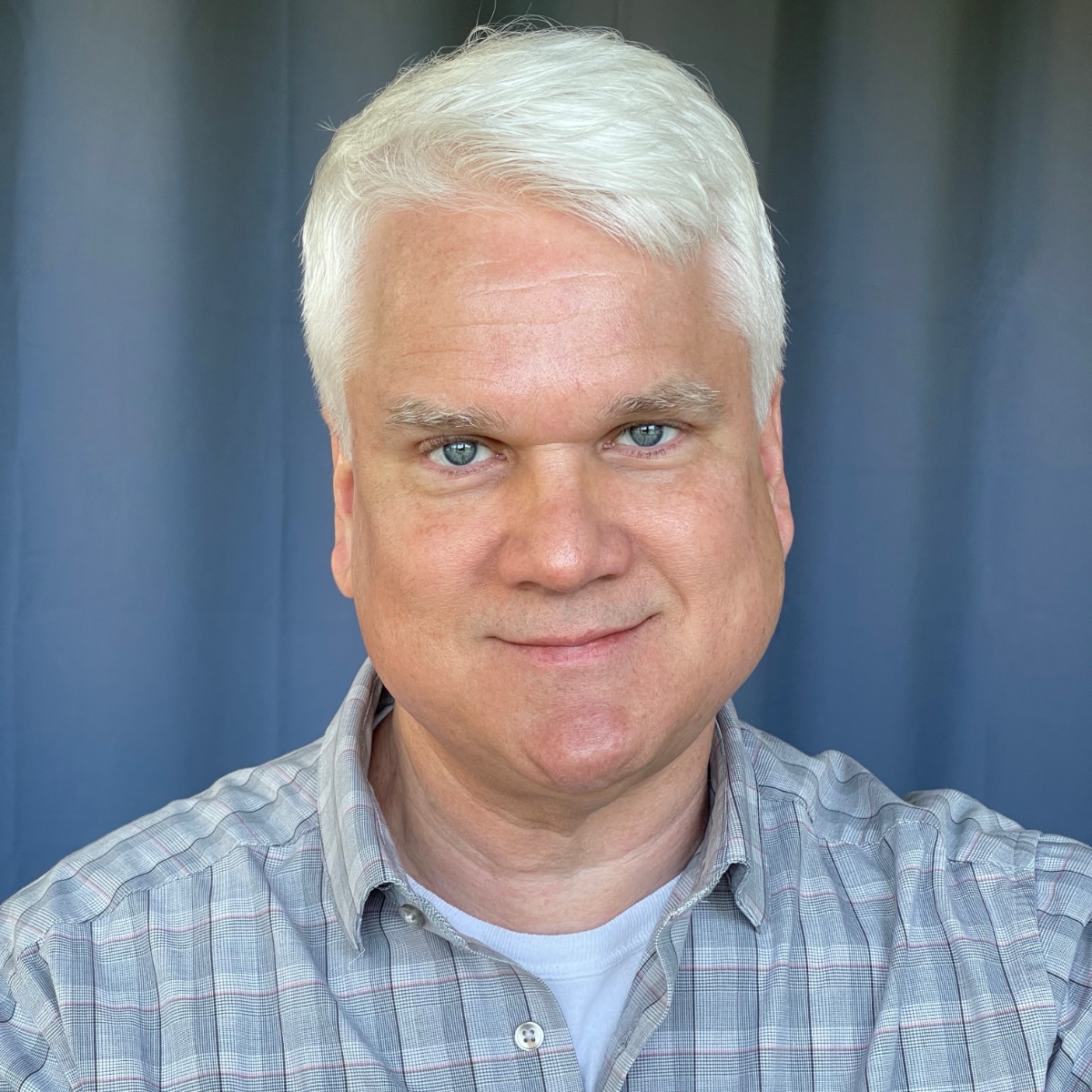
“It’s a time in America when so many of us are asking how we can help each other and how we can get out of this mess. The Big Woods Declaration is my contribution.”
– Erik Christopher Sahlin
Sahlin’s life is rooted in the Big Woods of Minnesota. As a kid, he explored the Big Woods, hunting for mushrooms and wildflowers. His elementary school had popsicle parties in the Big Woods. He ran through the Big Woods for the Nerstrand “Bologna Days” 10k race. He spent time maintaining the trails in the Nerstrand Big Woods State Park. And when he exhibited his nature photography at the county fair, he did so as a member of the Big Woods 4-H Club.
As an adult, Sahlin realized that he had also been a kind of time-shifted neighbor of Thorstein Veblen, America’s visionary from the Big Woods. The Veblen farm was just one hill over from his own childhood home.
In 2024, Sahlin joined neighbors in an effort to stop a pit mining operation along the Big Woods corridor. While that effort was unsuccessful, it inspired Sahlin to run for county commissioner, campaigning “from the Big Woods to a better Rice County.”
With Big Woods roots, Sahlin also pursued work on international and national issues.
While in high school, Sahlin spent time in Russia and Ukraine as part of a peace initiative under Gorbachev’s USSR. In college, he trained for a career in foreign service. He lived in China during its rapid modernization, and later studied and worked in Taiwan as that society went through democratization. Sahlin became an advanced student and teacher of modern Chinese history and politics. Years later, he contributed to work to strengthen international environmental standards, as well as work to protect the mission of USAID to help America’s neighbors.
Living in the San Francisco Bay Area, Sahlin joined pioneering efforts to apply the field of cognitive linguistics to improve decision-making on national issues. Drawing also from Veblen’s insights, he helped make progress on issues including healthcare, civil rights, education, and environmental protection. Over two decades, he co-led a series of organizations to advance this work.
Sahlin went through the public schools of Nerstrand and Faribault in Minnesota, attended college at Georgetown University, and studied and taught at Stanford University and the University of California. He lives with his family in Northfield, Minnesota.